
Upper Richmond River Waterways and Wetlands

The upper Richmond River catchment Waterway and Wetland Health Assessment and Action Plan has been initiated by Kyogle Council in recognition of the critical role that healthy upper catchment waterways and wetlands play in supporting both local and downstream ecosystems and communities.
The catchment is experiencing increasing pressure from climate change, ongoing land-use impacts, sediment pollution, and invasive species. While a range of localised management plans and rehabilitation efforts are currently underway across the upper catchment, there is no overarching, catchment-scale strategy to guide future management and investment within the Kyogle Council area. This project seeks to address this gap by assessing and mapping the current condition of waterways and wetlands, identifying and prioritising areas for on-ground rehabilitation, and developing a targeted action plan to guide future investment.
The project will align with broader initiatives, including the Richmond River Estuary Coastal Management Program (CMP), the Richmond River Catchment Partnership, and other concurrent research projects across the wider Richmond River catchment. Through engagement with stakeholders and the community, the project aims to build local capacity, strengthen collaboration, and ensure that cultural values are recognised and integrated into long-term catchment management.
The upper Richmond River catchment Waterway and Wetland Health Assessment and Action Plan has been initiated by Kyogle Council in recognition of the critical role that healthy upper catchment waterways and wetlands play in supporting both local and downstream ecosystems and communities.
The catchment is experiencing increasing pressure from climate change, ongoing land-use impacts, sediment pollution, and invasive species. While a range of localised management plans and rehabilitation efforts are currently underway across the upper catchment, there is no overarching, catchment-scale strategy to guide future management and investment within the Kyogle Council area. This project seeks to address this gap by assessing and mapping the current condition of waterways and wetlands, identifying and prioritising areas for on-ground rehabilitation, and developing a targeted action plan to guide future investment.
The project will align with broader initiatives, including the Richmond River Estuary Coastal Management Program (CMP), the Richmond River Catchment Partnership, and other concurrent research projects across the wider Richmond River catchment. Through engagement with stakeholders and the community, the project aims to build local capacity, strengthen collaboration, and ensure that cultural values are recognised and integrated into long-term catchment management.
-
Project Update - October 2026
Share Project Update - October 2026 on Facebook Share Project Update - October 2026 on X (formerly Twitter) Share Project Update - October 2026 on Linkedin Email Project Update - October 2026 linkThe Upper Richmond River Waterway and Wetland Health Assessment and Action Plan were adopted at the Council's Ordinary Meeting 12 October 2026.
The final reports and supporting literature are available here and we encourage you to dive into the reports to learn more about our waterways and wetlands and what we can do to improve the health of our upper catchment. Also available on this site is an interactive map, providing access to the health assessment findings and a range of supporting resource materials.
For the purposes of this study, a 'healthy' waterway and wetland is defined as one in which ecosystem functions are being supported. Based on this definition, the assessment focused on geomorphology characteristics (a rivers character and behaviour) and riparian vegetation.
The study area is broken into ten subcatchments representing the major tributaries of the upper catchment: Richmond River, Findon Creek, Gradys Creek, Lynchs Creek, Fawcetts Creek, Leycester Creek, Eden Creek (upstream of Iron Pot Creek), Eden Creek (downstream of Iron Pot Creek), Iron Pot Creek and Shannon Brook. For each there is a catchment context, the key values to protect, the key threats or pressures impacting waterway/wetland health and priority management actions.
The catchment is experiencing pressures from climate change, ongoing land use impacts, sediment pollution and invasive species.
The Upper Richmond River Waterway and Wetland Health Assessment and Action Plan were adopted at the Council's Ordinary Meeting 12 October 2026.
The final reports and supporting literature are available here and we encourage you to dive into the reports to learn more about our waterways and wetlands and what we can do to improve the health of our upper catchment. Also available on this site is an interactive map, providing access to the health assessment findings and a range of supporting resource materials.
For the purposes of this study, a 'healthy' waterway and wetland is defined as one in which ecosystem functions are being supported. Based on this definition, the assessment focused on geomorphology characteristics (a rivers character and behaviour) and riparian vegetation.
The study area is broken into ten subcatchments representing the major tributaries of the upper catchment: Richmond River, Findon Creek, Gradys Creek, Lynchs Creek, Fawcetts Creek, Leycester Creek, Eden Creek (upstream of Iron Pot Creek), Eden Creek (downstream of Iron Pot Creek), Iron Pot Creek and Shannon Brook. For each there is a catchment context, the key values to protect, the key threats or pressures impacting waterway/wetland health and priority management actions.
The catchment is experiencing pressures from climate change, ongoing land use impacts, sediment pollution and invasive species.
-
Project Update - August 2026
Share Project Update - August 2026 on Facebook Share Project Update - August 2026 on X (formerly Twitter) Share Project Update - August 2026 on Linkedin Email Project Update - August 2026 linkSUBMISSIONS ARE NOW CLOSED
The two draft reports – the Health Assessment and Action Plan - are now available for viewing here:
https://www.yoursaykyogle.com.au/105190/widgets/493902/documents/331588
https://www.yoursaykyogle.com.au/105190/widgets/493902/documents/331720
We encourage you to dive into the reports to learn more about our waterways and wetlands and what we can do to improve the health of our upper catchment.
Explore the spatial data and view photos from across the study area using the interactive web map (see Interactive Map).
From now until 10th September, we are seeking feedback on the draft reports, which will be integrated into the final Action Plan adopted by Council.
Please use the following link to make a submission: https://www.yoursaykyogle.com.au/embeds/projects/105190/survey-tools/126198
Alternatively, you can make a submission by:
- Post to: PO Box 11 Kyogle NSW 2474
- Email: council@kyogle.nsw.gov.au
- Hand delivery to Council’s Administration Centre
SUBMISSIONS ARE NOW CLOSED
The two draft reports – the Health Assessment and Action Plan - are now available for viewing here:
https://www.yoursaykyogle.com.au/105190/widgets/493902/documents/331588
https://www.yoursaykyogle.com.au/105190/widgets/493902/documents/331720
We encourage you to dive into the reports to learn more about our waterways and wetlands and what we can do to improve the health of our upper catchment.
Explore the spatial data and view photos from across the study area using the interactive web map (see Interactive Map).
From now until 10th September, we are seeking feedback on the draft reports, which will be integrated into the final Action Plan adopted by Council.
Please use the following link to make a submission: https://www.yoursaykyogle.com.au/embeds/projects/105190/survey-tools/126198
Alternatively, you can make a submission by:
- Post to: PO Box 11 Kyogle NSW 2474
- Email: council@kyogle.nsw.gov.au
- Hand delivery to Council’s Administration Centre
-
Project Update - June 2026
Share Project Update - June 2026 on Facebook Share Project Update - June 2026 on X (formerly Twitter) Share Project Update - June 2026 on Linkedin Email Project Update - June 2026 linkKyogle Council's Upper Richmond Waterway and Wetland Health Assessment and Action Plan continues to progress, with an initial draft of the Waterway and Wetland Health Assessment now submitted to Council.The Health Assessment has focused on understanding the current condition of waterways and wetlands across the catchment by investigating what is happening, where it is occurring, and why. The project is now moving into the Action Plan phase, which focuses on answering the question: "What can we do about it?" The Action Plan will identify and prioritise practical management and rehabilitation actions to improve waterway and wetland health across the upper Richmond River catchment.As part of the project, a successful Fluvial Geomorphology and Stream Management Training Course was held on 27 May, attended by approximately 40 waterway practitioners from across the region. The course provided an introduction to river processes, stream management principles, waterway assessment approaches, and options for prioritising and delivering effective rehabilitation outcomes. The training was offered to help build local capacity and support long-term implementation of the Action Plan.Two new project resources are now available on the website:- Background Review (Part 1) was prepared at the outset of the project to review existing knowledge of the catchment and major management initiatives already underway. It provided the foundation for the Waterway and Wetland Health Assessment by helping ensure the project aligned with, and built upon, previous studies, programs and investments.
- Methods Review (Part 2) was also developed during Stage 1 and examines existing frameworks and approaches for assessing waterway and wetland health. The review informed the assessment methods adopted for this project and helped guide the development of a fit-for-purpose approach for the upper Richmond River catchment.
We encourage community members and stakeholders to continue following the project's progress via this website, where you can access project resources, explore the interactive map and stay informed about upcoming project milestones.Kyogle Council's Upper Richmond Waterway and Wetland Health Assessment and Action Plan continues to progress, with an initial draft of the Waterway and Wetland Health Assessment now submitted to Council.The Health Assessment has focused on understanding the current condition of waterways and wetlands across the catchment by investigating what is happening, where it is occurring, and why. The project is now moving into the Action Plan phase, which focuses on answering the question: "What can we do about it?" The Action Plan will identify and prioritise practical management and rehabilitation actions to improve waterway and wetland health across the upper Richmond River catchment.As part of the project, a successful Fluvial Geomorphology and Stream Management Training Course was held on 27 May, attended by approximately 40 waterway practitioners from across the region. The course provided an introduction to river processes, stream management principles, waterway assessment approaches, and options for prioritising and delivering effective rehabilitation outcomes. The training was offered to help build local capacity and support long-term implementation of the Action Plan.Two new project resources are now available on the website:- Background Review (Part 1) was prepared at the outset of the project to review existing knowledge of the catchment and major management initiatives already underway. It provided the foundation for the Waterway and Wetland Health Assessment by helping ensure the project aligned with, and built upon, previous studies, programs and investments.
- Methods Review (Part 2) was also developed during Stage 1 and examines existing frameworks and approaches for assessing waterway and wetland health. The review informed the assessment methods adopted for this project and helped guide the development of a fit-for-purpose approach for the upper Richmond River catchment.
We encourage community members and stakeholders to continue following the project's progress via this website, where you can access project resources, explore the interactive map and stay informed about upcoming project milestones. -
Project Update - April 2026
Share Project Update - April 2026 on Facebook Share Project Update - April 2026 on X (formerly Twitter) Share Project Update - April 2026 on Linkedin Email Project Update - April 2026 linkCLOSED: This discussion has concluded.Kyogle Council's Upper Richmond Waterway and Wetland Health Assessment and Action Plan is now well underway.
Over the past few months, four drop-in sessions were held across the catchment. At these sessions, attendees were invited to share their local knowledge to help build a clearer picture of the catchment's condition and to document current rehabilitation efforts and management approaches taking place. The information gathered through this process is vital to developing a detailed understanding of current condition, complementing the desktop assessments and field work undertaken by the project team.
If you were unable to attend a drop-in session, you can still get involved online by:
- Submit location-specific information via the interactive map
- Complete the online survey
Stage 2 of the project is now complete, with methods developed to assess waterway and wetland condition using a combination of desktop analysis and on-ground approaches.
The project is now in Stage 3, with field work underway to ground-truth and refine initial assessment results. The next stage will focus on prioritising sites for rehabilitation and developing detailed designs for priority works.
Kyogle Council's Upper Richmond Waterway and Wetland Health Assessment and Action Plan is now well underway.
Over the past few months, four drop-in sessions were held across the catchment. At these sessions, attendees were invited to share their local knowledge to help build a clearer picture of the catchment's condition and to document current rehabilitation efforts and management approaches taking place. The information gathered through this process is vital to developing a detailed understanding of current condition, complementing the desktop assessments and field work undertaken by the project team.
If you were unable to attend a drop-in session, you can still get involved online by:
- Submit location-specific information via the interactive map
- Complete the online survey
Stage 2 of the project is now complete, with methods developed to assess waterway and wetland condition using a combination of desktop analysis and on-ground approaches.
The project is now in Stage 3, with field work underway to ground-truth and refine initial assessment results. The next stage will focus on prioritising sites for rehabilitation and developing detailed designs for priority works.
-
Stage 1 - Project initiation and background review (December 2025)
Upper Richmond River Waterways and Wetlands has finished this stage- Review background information, including existing studies, data and past/current rehabilitation works and monitoring programs across the study area
- Define the requirements of the waterway and wetland health assessment
-
Stage 2 - Waterway and wetland health assessment method development (January 2026)
Upper Richmond River Waterways and Wetlands has finished this stage- Develop river and wetland health assessment method
- Develop an approach to prioritising reaches/sites for rehabilitation with consideration for different management priorities (e.g. habitat improvement, water quality improvement, flood mitigation etc.)
-
Stage 3 – Waterway and wetland health assessment (February - April 2026)
Upper Richmond River Waterways and Wetlands has finished this stage- Undertake desktop assessments and field work
- Develop online mapping tool to visualise assessment results
-
Stage 4 – Waterway and wetland action plan (May - July 2026)
Upper Richmond River Waterways and Wetlands has finished this stage- Prioritise waterways and wetlands for rehabilitation
- Develop detailed designs/management plans for high priority sites
- Develop an Action Plan
- Provide training and knowledge sharing opportunities to support implementation
-
Public Review (11th August – 10th September)
Upper Richmond River Waterways and Wetlands is currently at this stage- Open for public review and comment for 30 days

-
Click here to play video Channel incision process
-
Click here to play video Meander migration process
-
 Click here to play video
Consequences of a meander cutoff
Click here to play video
Consequences of a meander cutoff
-
 Click here to play video
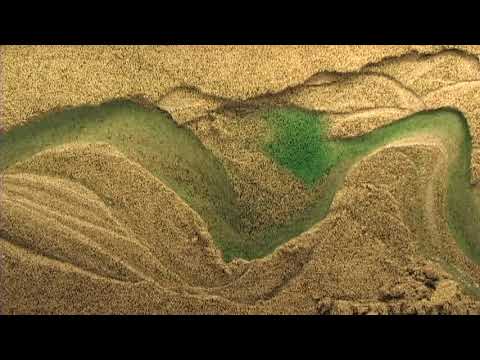
Consequences of sand and gravel extraction
Click here to play video
Consequences of sand and gravel extraction
-
Environmental Services oversee the management of the Richmond River Estuary Coastal Management Program
Kyogle Council
ESPhone 02 6632 1611 Email council@kyogle.nsw.gov.au